
The Best Gym KPI Tracking Software in 2026 (And Why It Matters)
TL;DR
KPI tracking has grown complex as fragmented systems and traditional tools mostly report the past, not real-time behavior or future risks. This guide reviews three tool categories (legacy management, dashboards, coaching) and why they lack unified data, predictive insights, and actionable intelligence. It presents Groe’s gym intelligence platform, which unifies operations, applies behavior analytics and predictive models, and uses computer vision for space utilization to surface early churn risks and improve performance. The industry is shifting from static reports to proactive, real-time decision support.
Why Tracking Gym KPIs Has Become So Complex
Gyms generate more data than ever before.
Attendance. Check-ins. Class participation. Equipment usage. Marketing campaigns. Retention metrics.
But understanding what those numbers actually mean is harder than it looks.
Most gym software was built to manage memberships --- not to understand member behavior.
Platforms like Mindbody, Zen Planner, and Trainerize help operators manage daily operations. They provide reports showing what happened yesterday.
But they rarely reveal what is happening inside your facility right now.
Or what might happen next.
Modern operators need more than reports. They need gym analytics software capable of connecting signals across the entire facility.
That is where gym intelligence software changes the equation.
Groe was built to transform everyday activity inside your facility into fitness facility analytics --- helping operators see patterns, anticipate risks, and improve performance across their gym.
Why Tracking Gym KPIs Has Become So Complex
Gyms generate more data than ever before.
Attendance.
Check-ins.
Class participation.
Equipment usage.
Marketing campaigns.
Retention metrics.
But understanding what those numbers actually mean is harder than it looks.
Most gym software was built to manage memberships — not to understand member behavior.
Platforms like Mindbody, Zen Planner, and Trainerize help operators manage daily operations. They provide reports showing what happened yesterday.
But they rarely reveal what is happening inside your facility right now.
Or what might happen next.
Modern operators need more than reports. They need gym analytics software capable of connecting signals across the entire facility.
That is where gym intelligence software changes the equation.
Groe was built to transform everyday activity inside your facility into fitness facility analytics — helping operators see patterns, anticipate risks, and improve performance across their gym.
What Makes a Great Gym KPI Tracking Software
Unified Data Across Operations
A gym runs on many systems.
Access control.
CRM.
Billing.
Class scheduling.
Marketing platforms.
When these systems operate independently, important signals remain hidden.
Strong gym analytics software connects these systems into a single operational view.
When sales data, facility activity, and retention signals live together, operators gain a clearer picture of what is working — and what is not.
Learn how Groe connects these systems through
Unified Operations and Member Data
Predictive Analytics and Member Insights
Most gym dashboards focus on the past.
But growth comes from understanding patterns before they become problems.
Modern fitness facility analytics tools use predictive models to uncover patterns in member behavior.
Examples include:
- declining attendance
- changes in workout frequency
- early cancellation indicators
- shifts in class engagement
These signals form the foundation of gym behavior analytics.
They allow operators to identify members who may disengage long before they cancel.
Learn how predictive models support gym operations here
Actionable Intelligence — Not Just Reports
Data only matters when it leads to action.
The best gym member retention software does not simply display metrics. It helps operators act on them.
That may include:
- reaching out to members whose activity has dropped
- adjusting class schedules based on demand
- improving onboarding experiences
- optimizing gym space utilization
Instead of static dashboards, modern platforms provide operational intelligence that supports better decisions.
The Landscape: Top Tools for Tracking Gym KPIs
Many tools claim to help gyms track performance.
But most fall into three main categories.
See the Signals Inside Your Gym
1. Legacy Gym Management Systems
(Mindbody, Zen Planner, ABC Fitness)
These systems were among the first to digitize gym operations.
They handle billing, scheduling, memberships, and basic reporting.
These systems manage operations well.
But they were not designed to deliver modern fitness facility analytics or deeper operational insight.
Verdict: Strong operational tools — limited decision intelligence.
2. Data Dashboard Tools
(Easalytics, Gym KPI, GymDesk)
Another category focuses on reporting dashboards.
These platforms help owners visualize their business metrics.
Because these platforms rely primarily on software data, they rarely capture what is happening across the physical gym floor.
They cannot analyze gym space utilization or member movement patterns.
Verdict: Better reporting — but still reactive.
3. Coaching & Engagement Platforms
(Wodify, Trainerize)
These platforms focus primarily on workout tracking and member engagement.
They are popular among boutique studios and trainers.
These systems help coaches guide workouts.
But they do not deliver gym intelligence software capabilities needed for full facility optimization.
Verdict: Excellent coaching tools — limited operational insight.
Why Groe Is a Smarter Approach to Gym KPI Tracking
Groe was designed around a simple idea.
Every gym generates signals.
Across members.
Across equipment.
Across spaces.
Across staff interactions.
But most gyms never see them.
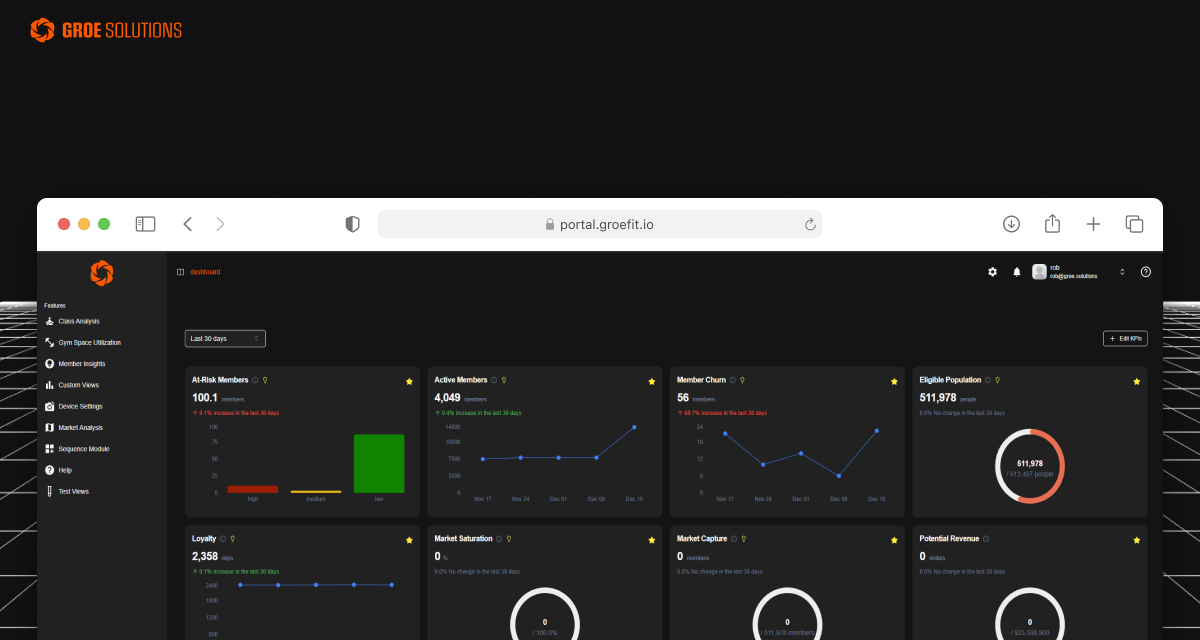
Groe connects those signals using gym intelligence software that combines:
- fitness facility analytics
- gym behavior analytics
- gym member retention software
- gym space utilization insights
This creates a clear picture of how your gym actually operates.
Understanding Facility Behavior in Real Time
One of Groe’s most distinctive capabilities is its computer vision technology.
Instead of relying solely on software logs, Groe analyzes activity patterns inside the facility itself.
This helps operators understand:
- member movement patterns
- equipment usage
- traffic across the facility
- missed service opportunities
These insights improve gym space utilization and enhance the member experience.
Learn more about Groe’s computer vision analytics:
https://groe.solutions/services/computer-vision
You can also explore how Groe measures space utilization here:
https://groe.solutions/features/space-utilization
Predicting Member Churn Before It Happens
Most cancellations do not happen suddenly.
Members drift first.
They attend fewer classes.
They visit less frequently.
They change workout habits.
These small signals often appear weeks before cancellation.
Groe uses gym behavior analytics to surface these early indicators.
Operators can intervene early — helping reduce member churn and strengthen engagement.
For more insights, read:
https://groe.solutions/blog/identify-at-risk-gym-members
You can also explore the difference between retention and acquisition here:
https://groe.solutions/blog/gym-member-retention-vs-acquisition
The Future of Gym KPI Tracking
The fitness industry is entering a new phase.
Operators are moving beyond spreadsheets and static reports.
They are building intelligent facilities where operational signals become visible in real time.
This is the role of gym intelligence software.
Not replacing operators.
But helping them see their gym more clearly.
Ready to See the Signals Inside Your Gym?
Every day your gym generates patterns.
Across members.
Across equipment.
Across spaces.
Most operators never see them.
Groe helps you understand them.
If you want to explore how fitness facility analytics can strengthen retention, improve gym space utilization, and reduce member churn, learn more here:
Q&A
Question: Why has tracking gym KPIs become so complex in 2026? Short answer: Gyms now generate vast, disparate data—from attendance and check-ins to class participation, equipment usage, campaigns, and retention—while most legacy tools were built to manage memberships, not interpret behavior. As a result, data lives in fragmented systems, dashboards report on the past rather than real-time activity, and few tools surface predictive risks or next-best actions. Modern operators need connected, behavior-aware analytics to move from static reporting to proactive decision support.
Question: How is gym intelligence software different from legacy management systems, dashboards, and coaching platforms? Short answer: Legacy management systems (e.g., Mindbody, Zen Planner, ABC) excel at billing, scheduling, and basic reporting but keep data siloed and backward-looking. Dashboard tools (e.g., Easalytics, Gym KPI, GymDesk) improve visualization yet remain reactive, often missing in‑facility behavior and space insights. Coaching platforms (e.g., Wodify, Trainerize) strengthen programming and engagement but offer limited operational analytics. Gym intelligence software unifies data across operations, applies behavior and predictive analytics, and delivers actionable, real-time insights—shifting from “what happened” to “what to do next.”
Question: What does “unified data across operations” mean, and why does it matter? Short answer: It means connecting access control, CRM, billing, class scheduling, and marketing platforms into a single operational view. When sales activity, facility behavior, and retention signals live together, hidden patterns emerge—like links between onboarding experiences and attendance drop‑offs or class demand and member churn. This unified context enables clearer decisions, targeted interventions, and faster optimization of programs, staffing, and schedules.
Question: How does Groe help predict and reduce member churn? Short answer: Groe’s gym behavior analytics monitor early risk signals—declining attendance, shifts in workout frequency, changes in class engagement, and early cancellation indicators—that often appear weeks before a member quits. By surfacing these patterns in real time, operators can intervene sooner with targeted outreach, schedule adjustments, or improved onboarding, strengthening engagement and reducing churn.
Question: What can Groe’s computer vision reveal about facility behavior and space utilization? Short answer: Beyond software logs, Groe’s computer vision analyzes in‑facility activity to illuminate member movement patterns, equipment usage, traffic flows, and missed service opportunities. These insights help optimize gym space utilization, rebalance layouts or class schedules based on demand, and enhance member experience—turning the physical gym floor into a measurable, improvable asset.